
Back to the journal
Shops & Industry
The Simple Science of Radiant Heat
A simple, accurate explanation of how infrared heating actually works Understanding how heat moves inside a building doesn’t require advanced physics — just a clear picture of what happens when infrared energy...
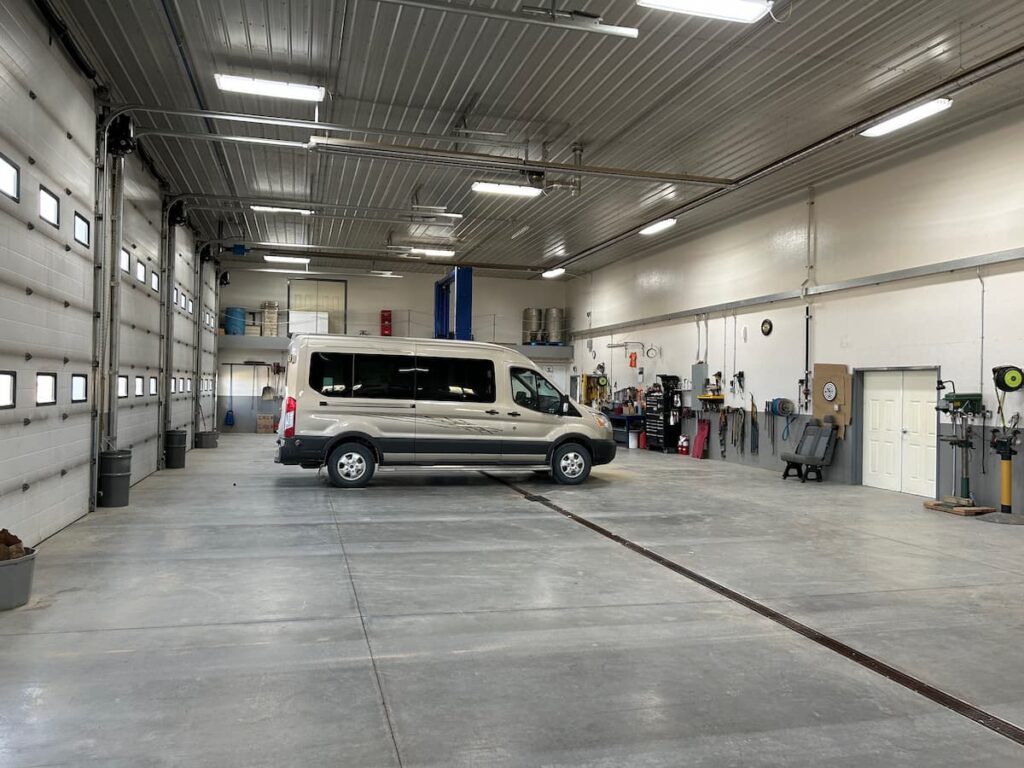
A simple, accurate explanation of how infrared heating actually works
Understanding how heat moves inside a building doesn’t require advanced physics — just a clear picture of what happens when infrared energy interacts with solid matter. The concepts below explain, in everyday terms, why infrared behaves differently than air-based heating and why it produces such stable, balanced environments in large shops.1. Infrared radiant heating doesn’t heat air — it heats surfaces
Air contains very little mass. It is mostly empty space, which makes it a poor thermal reservoir. Infrared (IR) waves move through air with almost no interaction. Their work begins only when they strike something solid. Much like sunlight:- IR barely warms the air itself
- it warms the ground, tools, vehicles, equipment, walls, and concrete — anything with physical mass
2. IR interacts with electron clouds in solid materials
Every solid object is built from atoms, and each atom is surrounded by electrons. When infrared reaches a solid surface:- the electrons absorb the energy,
- shift into a slightly higher energy state,
- and pass that energy inward through the structure of the material.
3. Energy spreads through the atomic lattice
Once electrons are energized, that thermal vibration moves through the object. This is why:- steel warms,
- concrete warms,
- overhead doors warm,
- walls warm,
- and eventually the entire building warms.
4. Warm solids re-radiate energy back into the space
After surfaces have absorbed infrared energy, they begin to release it back into the room through:- gentle radiant emission,
- mild convective warmth,
- and steady thermal return that continues even when the heater cycles off.
- balanced temperatures,
- short burner cycles,
- quick drying,
- and overall stability throughout the building.
5. Why this is the thermodynamic opposite of underfloor heat
Underfloor systems start by heating the slab. To influence the rest of the building, they must:- warm the slab,
- warm the air above it,
- and rely on that air to warm everything else.
- rises,
- escapes when doors open,
- mixes inconsistently,
- and has almost no ability to heat cold mass.
- underfloor: heats air → hopes the air warms the building
- infrared: heats the building → the building warms the air
Keep Reading
Related articles from the same lane.

Reflect-O-Ray Radiant Heat in a Commercial Greenhouse
Side-by-side field observations from a working greenhouse: floor temperatures, root-zone temperatures, slab conduction, and what Reflect-O-Ray's flattened tube profile did for plant response over...
Read article
Quicker. Faster. Further. Stronger. Safer.
Two heaters can both be called "radiant" and behave nothing alike. Reflect-O-Ray's low-mass aluminized spiral tubing changes five specific things about how a radiant...
Read article
Let There Be Light
Infrared is the warming part of sunlight — invisible light that travels through cold air without warming it, then sinks into solid surfaces and...
Read article