
Quicker. Faster. Further. Stronger. Safer.
Two heaters can both be called "radiant" and behave nothing alike. Reflect-O-Ray's low-mass aluminized spiral tubing changes five specific things about how a radiant tube system performs in a working building — and these are the engineering choices that make those changes possible.
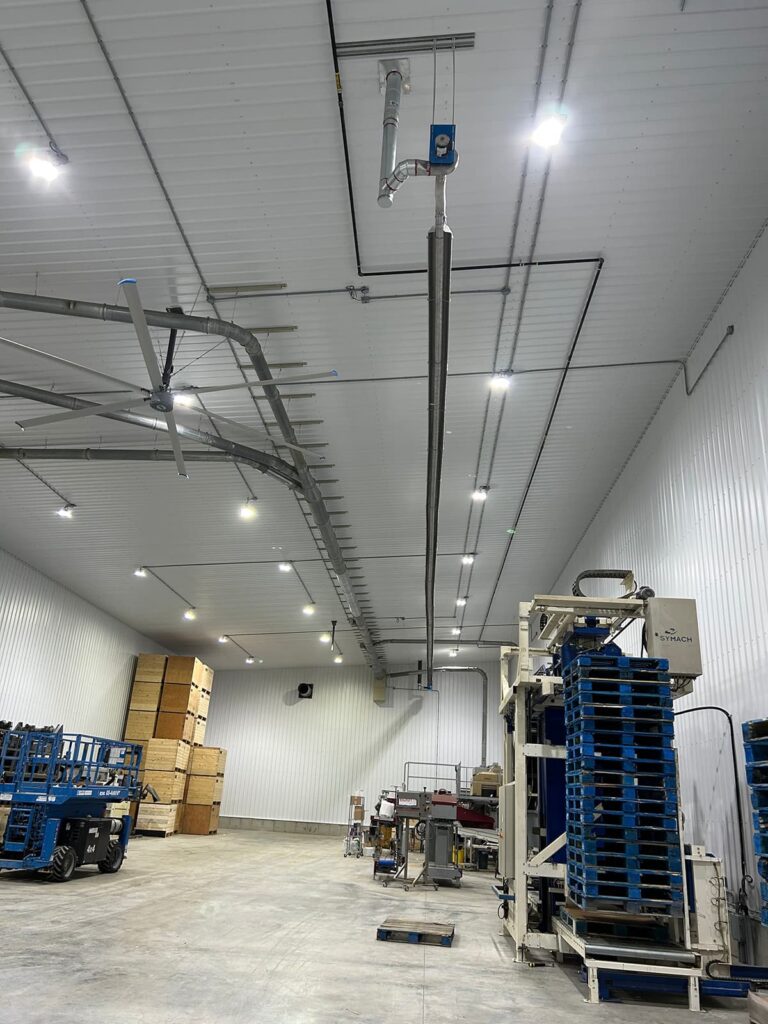
Quicker. Faster. Further. Stronger. Safer.
Two heaters can both be called “radiant” and behave nothing alike. Reflect-O-Ray’s low-mass 22-gauge aluminized spiral tubing changes five specific things about how a radiant tube system performs in a working building: the building recovers from heat loss faster, the system reaches radiant output in 3–6 minutes instead of 13–16, heat travels the full length of the run instead of pooling at the burner, the temperature stays balanced end-to-end, and the safety system shuts the flame down on any pressure change. The result is the original dry-tube system — no hot front, no cold rear, no condensation, no rust.
Two infrared tube heaters mounted in identical buildings can deliver wildly different results. One drops a hot spot under the burner and runs cold by the back end. The other delivers steady, usable warmth across the entire floor. The difference isn’t in the brochure language — both will say “radiant.” It’s in the tubing, the burner configuration, the exhaust design, and the layout pattern.
This article walks through the five things Reflect-O-Ray does differently — and why each one shows up in how the building feels, how fast it recovers, and how much fuel it burns to do the work.
Why a radiant building bounces back faster.
Radiant heating works by warming objects and surfaces directly, not just the air. That heat gets locked into the mass of floors, walls, and equipment, which then radiate warmth back into the space. Reflect-O-Ray takes full advantage of that physics to ensure quicker heat recovery in any environment.
- Locked-in warmth. When infrared energy is absorbed by floors, walls, and equipment, those surfaces become secondary heat sources, radiating warmth back into the room. The space stays comfortable even when the system cycles off or a door opens.
- Minimal heat loss. Unlike conventional systems, which lose heat as warm air escapes, radiant systems keep warmth inside the mass of the building. When overhead doors open, conventional systems have to work hard to reheat the space — a radiant building’s mass is still warm and re-warms the new air within minutes.
- Efficiency in action. Reflect-O-Ray’s infrared heating reduces the need for continuous operation, cutting fuel consumption and operating costs.
The ability to quickly restore comfort after a temperature drop makes Reflect-O-Ray an ideal solution for environments with frequent airflow changes — barns, shops, warehouses, industrial spaces, anywhere doors cycle and outside air gets dragged in regularly.
From cold to comfortable in minutes.
Traditional radiant heating systems can take 13–16 minutes to warm up due to their reliance on heavy, inefficient materials. Reflect-O-Ray’s low-mass aluminized spiral tubing changes the game, delivering faster performance with less wasted energy.
- Low-mass advantage. Spiral bonding reinforces the lightweight aluminized tubing, providing structural integrity under high temperatures without adding weight. This durable, lightweight design ensures efficient heat transfer along the entire run, while traditional black steel tubes trap heat at the front end and fail to transfer it effectively along their length.
- Rapid infrared output. Reflect-O-Ray systems reach effective radiant temperatures in 3–6 minutes — comfort begins almost as soon as the burner fires.
- Fuel savings. The reduced warm-up time and operational efficiency of Reflect-O-Ray result in 30–50% or more fuel savings compared to conventional heating systems.
- Thermal efficiency. The lower thermal mass of aluminized steel minimizes the energy needed to reach optimal operating temperatures, reducing both warm-up delays and operational costs.
By achieving faster start-up times and significantly lowering fuel consumption, Reflect-O-Ray improves productivity, enhances comfort, and sets a new standard in radiant heating performance.
Heat that travels the full length of the run.
Efficient heat transfer is key to maximizing radiant output.
In contrast, Reflect-O-Ray’s combination of 16-gauge aluminized combustion tubing and 22-gauge aluminized spiral tubing works like an aluminum frying pan — rapidly and evenly transferring heat along the system length, minimizing drastic temperature drop-offs.
Density and thermal resistance. Traditional high-density black steel tubing builds excessive heat at the front end, creating intense hot spots near the burner and cold zones further downstream. Reflect-O-Ray’s low-mass tubing reduces this imbalance, maintaining balanced tube temperatures and delivering consistent, usable infrared energy across the entire heating run.
Engineered thermal progression. Every radiant system requires a gradual temperature decline to achieve proper exhaust conditions. The objective is not to eliminate cooling — it’s to control it. In traditional high-mass systems, temperatures fall off quickly after the combustion zone. Usable radiant output tapers early, leaving much of the downstream tubing operating below optimal infrared intensity.
Reflect-O-Ray is engineered for controlled thermal progression. By transferring heat efficiently along the tube, effective radiant temperatures are maintained further down the run — maximizing usable output while still finishing at proper exhaust temperature.
No hot front. No cold rear. Just heat.
Balanced heat distribution is key to effective radiant heating. Infrared wavelengths only become effective at temperatures above 400°F — anything lower, and the system begins emitting mostly convection heat, not radiation.
To maximize infrared performance, tube temperatures must remain evenly distributed from end to end, ensuring consistent heat absorption by surrounding surfaces. Reflect-O-Ray delivers powerful, steady infrared energy, allowing mass — floors, walls, equipment — to absorb and re-radiate warmth back into the space.
Overcoming temperature drop-offs. Traditional radiant heating systems suffer from uneven heat distribution, creating what can be described as a “too hot, just right, too cold” problem along the length of the tube:
- Too hot — The front end of the system experiences unbearable, uncomfortable intensity, blasting excessive heat near the combustion zone.
- Just right — The middle section reaches a reduced temperature intensity, but just enough for usable radiant output.
- Too cold — By the time the heat reaches the downstream tubing, temperatures drop too low, reducing effective radiant performance.
The Reflect-O-Ray advantage. Unlike traditional systems, Reflect-O-Ray’s 22-gauge aluminized spiral tubing ensures consistent tube temperatures across the system. The lightweight, low-mass tubing transfers heat more efficiently, preventing temperature drop-offs and delivering balanced infrared energy from the combustion zone through the active radiant section.
Built to protect the system, the space, and what’s inside it.
Reflect-O-Ray doesn’t just deliver superior performance — it’s also designed to protect your system, your space, and the environment within it.
- Upstream and downstream airflow safety. Reflect-O-Ray’s advanced safety system immediately shuts off in the event of a pipe break or a pressure imbalance, preventing damage or unsafe conditions. A pressure system running hot has no equivalent protection.
- Low-intensity heating for sensitive environments. Unlike high-intensity radiant systems, which can create harsh hot spots and stress on animals, Reflect-O-Ray’s low-intensity heat distribution ensures even, gentle warmth. With the use of thermal control tubing, front-end temperatures can be balanced to provide even greater comfort in sensitive environments like poultry facilities or swine nurseries. This consistent, uniform heat reduces stress on animals, supporting their comfort and productivity.
- Long-lasting and low maintenance. Reflect-O-Ray’s non-corrosive tubing and dry tube design eliminate the need for regular draining or maintenance to remove corrosive buildup. A worry-free, durable system that performs efficiently year after year.
The original dry tube system.
Traditional radiant heating systems operate at high-intensity heat near the burner, creating extreme temperatures that result in “scorching” at the front end of the system. These uneven temperature gradients cause the rest of the system to suffer from drastic temperature drop-offs, leading to hot and cold zones and uncomfortable heating conditions.
Condensation and rust. Traditional systems face inefficiencies due to their high-density black steel tubing. The heavier material slows heat transfer, trapping excessive heat at the front while struggling to distribute it evenly across the system. This imbalance causes hot combustion gases to cool prematurely, leading to condensation inside the tubing. Over time, moisture mixes with combustion byproducts, forming corrosive compounds that accelerate rusting and reduce system performance.
Reflect-O-Ray eliminates these inefficiencies with its low-mass, aluminized spiral tubing, ensuring smooth, uninterrupted heat transfer along the entire system length. By avoiding thermal bottlenecks, Reflect-O-Ray maintains consistent tube temperatures, delivering balanced infrared energy throughout the space for effective and efficient heating.
Additionally, Reflect-O-Ray’s vacuum-vented design efficiently expels combustion gases before condensation can form, reducing the risk of rust and corrosion. For applications in highly corrosive environments, Reflect-O-Ray offers complete stainless steel systems — including burners, tubing, shields, and exhaust fans — for unmatched durability in the toughest conditions.
While any radiant heating system can be susceptible to condensation if not properly designed, Reflect-O-Ray’s advanced engineering ensures a dry tube environment, providing long-lasting performance and peace of mind.
Stronger. Safer.
Five engineering choices. One reason every one of them matters: the building doesn’t care what’s printed in the brochure. It only cares what reaches the floor.
This article reflects independent research and analysis of infrared radiant heating principles by Enviro-Smart Inc. It is intended for educational purposes and does not represent official technical literature, engineering position, or product claims of Combustion Research Corporation. Reflect-O-Ray® is a product of Combustion Research Corporation. All conclusions, interpretations, and recommendations expressed herein are solely those of the author.
Related articles from the same lane.
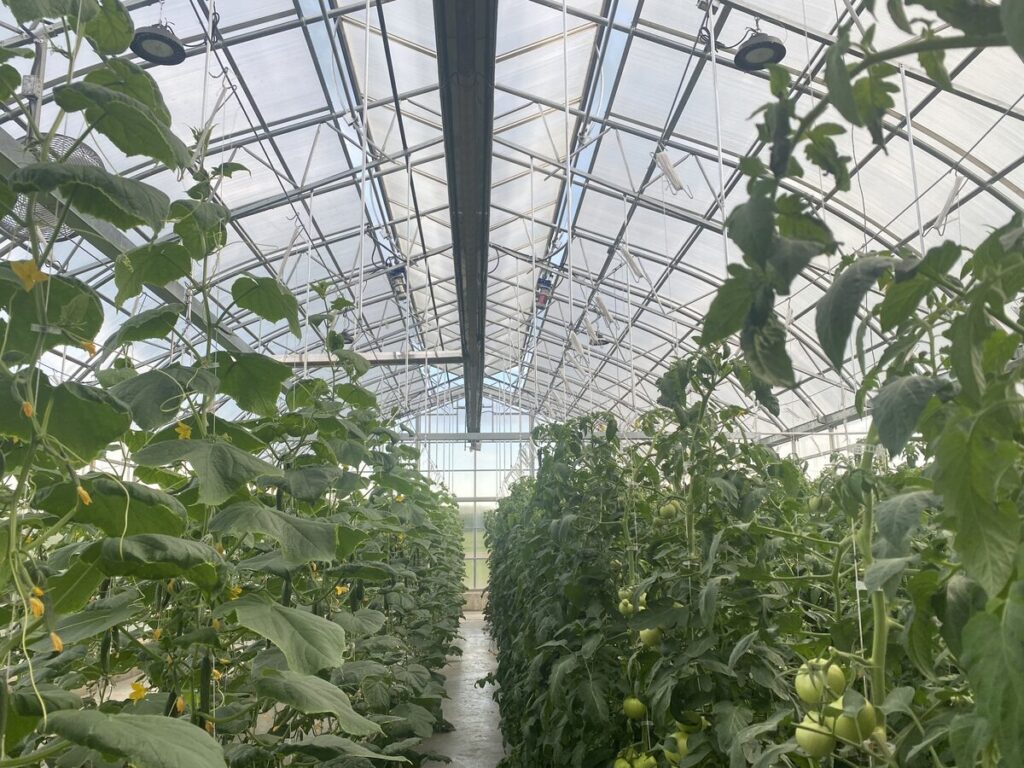
Reflect-O-Ray Radiant Heat in a Commercial Greenhouse
Side-by-side field observations from a working greenhouse: floor temperatures, root-zone temperatures, slab conduction, and what Reflect-O-Ray's flattened tube profile did for plant response over...
Read article
Let There Be Light
Infrared is the warming part of sunlight — invisible light that travels through cold air without warming it, then sinks into solid surfaces and...
Read article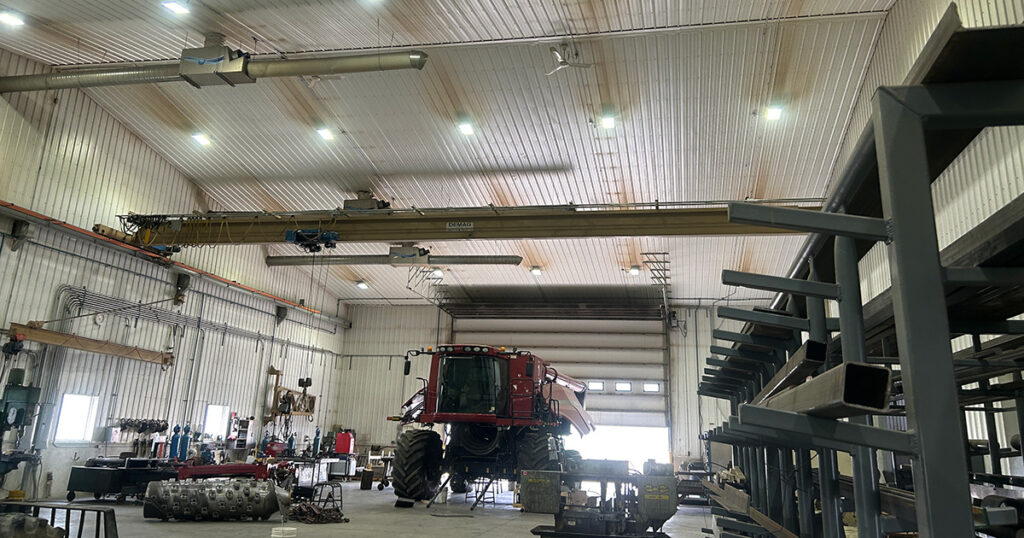
The Grime Line Time-Line
Underfloor heating in a tall shop deposits moisture wherever surfaces sit below the dew point. After a decade that grime line is visible from...
Read article