
Radiant Heating vs Underfloor Systems
At the core of infrared heating is the interaction between electromagnetic radiation and the atoms within objects. When objects are exposed to infrared influence, the photons, or particles of light, interact with the atoms at a subatomic level. This interaction initiates a fascinating dance at the molecular level. As the photons collide with the atoms, they transfer energy, causing the atoms to vibrate and spin more rapidly. This heightened motion at the subatomic level is what we perceive as an increase in temperature. It’s a microscopic ballet where energy is exchanged, and the result is the generation of heat.

Mass Activation, Runtime, and Structural Efficiency Explained
Most heating systems are judged by how hot the air feels when the heat is running. But true thermal performance is not defined by air temperature alone.
It is defined by:
- how deeply heat penetrates solid mass,
- how evenly energy is stored across surfaces,
- and how little the system must run to maintain comfort.
Infrared radiant heating behaves fundamentally differently than convection-based systems. To understand why its performance is so stable, efficient, and responsive, we need to look at what infrared energy actually does at the physical level.
1. Infrared Does Not Heat Air — It Heats Surfaces
Air is mostly empty space at the molecular scale. Infrared (IR) energy passes through it with very little interaction.
Instead, IR behaves much like sunlight:
- it bypasses the air,
- it strikes solid matter directly,
- and it transfers energy into physical surfaces.
This is why infrared does not attempt to “warm the room” first. Its function is to energize the building itself.
2. How Infrared Energy Interacts with Solid Matter
All solid materials are built from atoms. Each atom is surrounded by electrons arranged in energy shells.
When infrared energy reaches a surface:
- electrons absorb a portion of that energy,
- they elevate slightly in energy state,
- that energy transfers inward through the atomic structure of the material,
- and vibration propagates through the lattice.
That vibrational motion is heat at the atomic scale.
This process occurs in:
- steel
- concrete
- overhead doors
- walls and panels
- equipment and tools
- structural framing
This is not air heating. This is direct mass activation.
3. Activated Mass Becomes a Thermal Reservoir
Once IR energy is absorbed into solid materials:
- those materials store the energy,
- they equalize internally,
- and they begin returning heat gently back into the space.
This return happens in two ways:
- low-intensity re-radiation,
- soft convective release.
Once activated:
- walls no longer act as cold sinks,
- doors no longer sweat,
- floors no longer feel isolated from the room,
- and equipment stops stripping heat from the air.
The building itself becomes the heater. This is the condition known as thermal equilibrium.
4. Why Underfloor Heating Operates in the Opposite Direction
Underfloor systems begin with a forced limitation: they apply heat to a single horizontal plane, and that plane is a low-temperature emitter.
At typical operating conditions, a slab:
- cannot project meaningful infrared into walls or steel,
- cannot activate overhead mass,
- cannot influence structural heat storage,
- and therefore cannot stabilize the building envelope.
So it defaults to convection.
That means:
- air is warmed first,
- air rises immediately,
- heat escapes when doors open,
- cold wall mass continuously pulls energy back out of the space,
- and the system must run long cycles to rebuild temperature from the floor upward.
One surface is asked to compensate for the entire structure. Physics does not allow that imbalance to perform efficiently.
For a deeper dive into the specific limitations of hydronic slabs in large shops, see
Underfloor Heating — The Uncomfortable Truth.
5. Radiant Systems Reverse the Heat Path
Infrared radiant heating flips the entire energy pathway:
- instead of heating air and hoping it warms the building,
- it heats the building so the building stabilizes the air.
In this sequence:
- mass stores heat,
- mass returns heat,
- air becomes the secondary medium,
- and runtime shortens dramatically.
This is the thermodynamic reversal that underfloor systems cannot achieve.
For a more detailed comparison of runtime, mass activation, and structural performance in large shops, see
Runtime Efficiency and Mass Activation in Reflect-O-Ray Low-Intensity Infrared Systems.
6. Why Material Behavior Matters
Not all materials store and release heat equally.
- Concrete holds large energy volumes and releases them slowly.
- Steel accepts and transfers heat rapidly.
- Walls, doors, and panels govern condensation behavior.
- Equipment and vehicles absorb and return large thermal loads.
When only the floor is heated, most of this mass remains thermally inactive.
When the structure is activated, all of it participates.
7. The Real Definition of Heating Efficiency
Combustion efficiency measures how cleanly fuel burns. It does not tell you how a building behaves.
Energy efficiency in real spaces is defined by runtime.
A system that activates mass:
- runs shorter cycles,
- recovers faster after door events,
- resists condensation,
- dries wet spaces rapidly,
- and maintains comfort with less fuel input.
A system that relies on air alone:
- rebuilds heat repeatedly,
- fights cold mass continuously,
- and sacrifices fuel to overcome its own limitations.
8. Why Moisture Behavior Changes in Radiant Buildings
Warm air always carries moisture. Condensation occurs when that air contacts cooler surfaces.
If walls, doors, and structure are cold:
- fog lingers,
- moisture accumulates,
- drying slows dramatically.
If those same surfaces are thermally active:
- dew points widen,
- moisture has nowhere to collect,
- and vapor clears rapidly.
This is not airflow control. It is surface temperature control.
9. What All of This Means in Practice
Infrared radiant heating succeeds because it activates mass first, stabilizes structure, and allows air temperature to become a byproduct instead of a crutch.
When the building becomes the reservoir:
- temperature becomes steady,
- runtime drops,
- condensation recedes,
- and recovery becomes fast and natural.
That is the physical foundation behind radiant performance.
Further Reading and Technical References
For manufacturer-level technical information on low-intensity infrared radiant systems, see
Combustion Research Corporation, the developer of Reflect-O-Ray® systems.
This article is intended as an educational overview of infrared radiant heating principles and mass activation in buildings. It is not a substitute for engineered design, local code review, or manufacturer-specific installation instructions.
Related articles from the same lane.
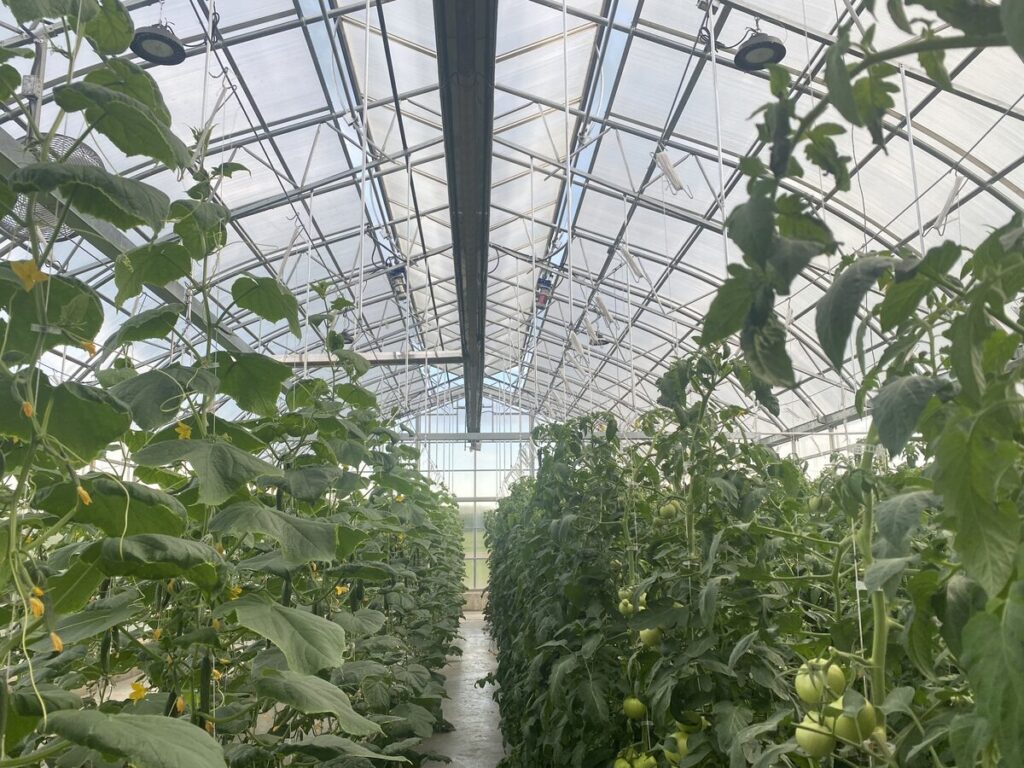
Reflect-O-Ray Radiant Heat in a Commercial Greenhouse
Side-by-side field observations from a working greenhouse: floor temperatures, root-zone temperatures, slab conduction, and what Reflect-O-Ray's flattened tube profile did for plant response over...
Read article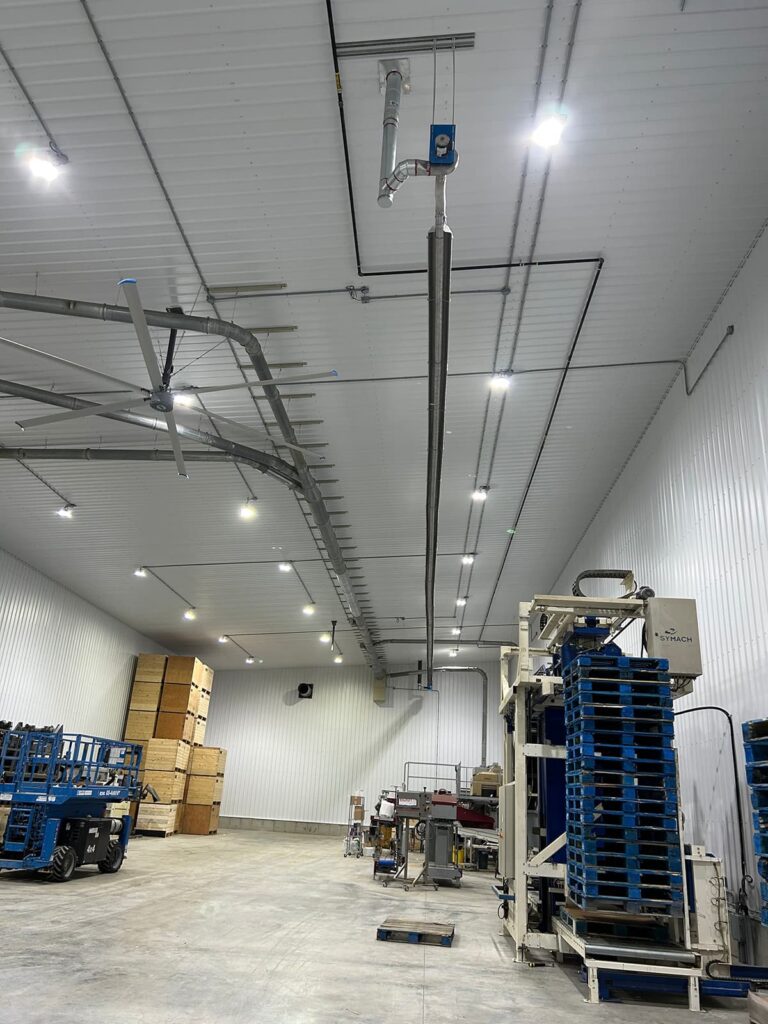
Quicker. Faster. Further. Stronger. Safer.
Two heaters can both be called "radiant" and behave nothing alike. Reflect-O-Ray's low-mass aluminized spiral tubing changes five specific things about how a radiant...
Read article
Let There Be Light
Infrared is the warming part of sunlight — invisible light that travels through cold air without warming it, then sinks into solid surfaces and...
Read article