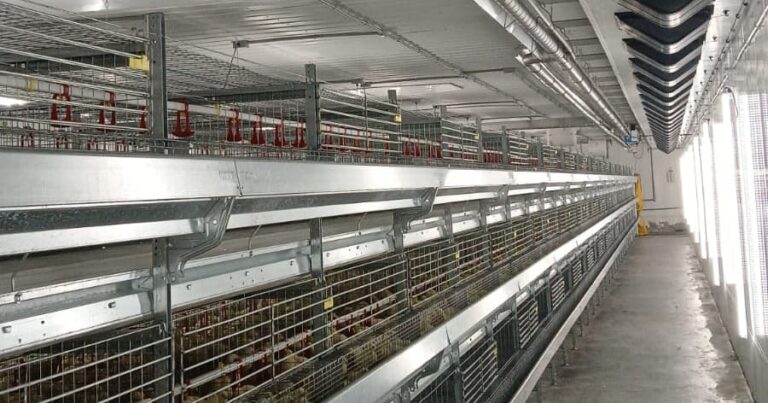
Fresh eggs on automated conveyor in climate-controlled poultry facility

How Barn Temperature, Surface Dryness, and Humidity Directly Affect Egg Health & Shell Quality

In poultry production, everything begins with the environment. Egg quality, shell strength, bird health, and pathogen pressure are all downstream effects of one primary factor: how heat and moisture behave inside the barn.

Most operations focus on air temperature alone. But temperature without surface control creates hidden instability. Floors, walls, bedding, steel, and equipment govern condensation, bacteria growth, and long-term flock performance.

This article explains how thermal behavior, humidity control, and mass activation directly influence:

  • egg cleanliness and shell strength
  • bacterial and pathogen pressure
  • litter moisture and ammonia levels
  • bird stress and immune response

1. Why Warm Air Alone Does Not Protect Egg Quality

Warm air can feel comfortable while surfaces remain cold. When warm, moisture-laden air contacts cold walls, ceilings, floors, and equipment, condensation forms instantly.

Condensation creates:

  • wet litter
  • slick floors
  • bacterial bloom zones
  • ammonia production
  • shell contamination risk

This is why barns can meet temperature targets and still struggle with odor, disease pressure, and dirty eggs.


2. Surface Temperature Is the Hidden Control Point

Pathogens thrive where moisture collects. Moisture collects where surfaces are colder than the surrounding air.

Once walls, steel, and floors are brought into thermal equilibrium with the air:

  • condensation stops forming
  • vapor pressure equalizes
  • bedding dries instead of accumulating moisture
  • pathogen pressure collapses

This is not an airflow issue. It is a surface temperature issue.


3. Humidity, Ammonia, and Shell Integrity

High humidity accelerates ammonia release from litter. Ammonia stresses birds, burns respiratory tissue, suppresses immune response, and weakens shell quality over time.

When surfaces stay warm:

  • moisture does not accumulate
  • litter dries faster
  • ammonia production slows
  • respiratory stress drops
  • shell integrity improves

Stable surface temperature is one of the most powerful environmental health controls available in a poultry barn.


4. Why Floor-Only Heating Cannot Stabilize a Poultry Barn

Underfloor heating warms a single horizontal plane. It does not meaningfully raise wall, ceiling, steel, or structural temperatures.

This creates constant thermal imbalance:

  • warm floor
  • cold walls
  • cold steel
  • persistent condensation bands
  • long heat recovery cycles

The building never becomes thermally neutral. The system must run longer and harder just to fight cold mass.


5. Mass Activation: The Missing Layer in Poultry Barn Heating

Infrared radiant heating activates the entire structure:

  • walls
  • steel framing
  • floors
  • equipment
  • bedding mass

Once activated, these surfaces store energy and release it gently back into the space. The barn itself becomes the thermal buffer.

This eliminates shock cooling during ventilation cycles, door openings, and weather swings — and keeps moisture from ever reaching the dew point in the first place.


6. What This Means for Egg Quality in Practice

When the environment is stabilized at the surface level:

  • eggs remain cleaner at collection
  • shell membranes strengthen
  • bacterial transfer rates drop
  • wash loss declines
  • flock stress reduces

These are not marginal gains. They represent system-level performance improvements that compound over an entire production cycle.


7. Environmental Control Is Now a Production Variable

Modern poultry operations no longer compete solely on feed, genetics, or automation.

Environmental stability itself is now a controllable production variable. Heat behavior, moisture movement, and surface temperature determine whether pathogens thrive or collapse.

The most profitable barns no longer chase air temperature. They stabilize the building itself.


Conclusion

Egg quality begins long before collection. It begins in how effectively a barn controls moisture, condensation, and surface temperature.

When the structure itself becomes warm and dry, bird health stabilizes, pathogen pressure falls, litter conditions improve, and shell integrity follows.

That outcome is not achieved through airflow alone. It is achieved through mass activation, humidity control, and true thermal balance inside the building envelope.

Facebook
Twitter
LinkedIn

Blog Posts

Energy Efficiency

Reflect-O-Ray: Everything Heating

Understanding Air-First vs Surface-First Heating Air temperature isn’t barn temperature. A barn is floors, walls, cages, and the ceiling. When all of those sit close in temperature, the room stays dry...

THE SCIENCE OF INFRARED HEATING IN POULTRY BARNS

Why Heating Mass — Not Just Air — Changes Everything A deep scientific overview of radiant physics, mass activation, and the engineering principles behind next-generation low-intensity infrared...

The Simple Science of Radiant Heat

A simple, accurate explanation of how infrared heating actually works Understanding how heat moves inside a building doesn’t require advanced physics — just a clear picture of what happens when...

PRECISION PHYSICS

Runtime Efficiency and Mass Activation in Reflect-O-Ray Low-Intensity Infrared Systems In a large shop, true efficiency begins when the walls, doors, and structure are held in temperature equilibrium...

UNDERFLOOR HEATING

The Uncomfortable Truth About Hydronic Slab Systems Many shops install hydronic underfloor heating because it seems like a straightforward application of basic physics. If heat naturally rises, then...

Reflect-O-Ray Infrared Radiant Heating vs. Underfloor / Unit Heaters

Discover why Reflect-O-Ray is the smart choice for heating your shop, offering rapid response, energy efficiency, and even heat compared to other systems...

How River Road Colony Cut Costs and Boosted Efficiency with Reflect-O-Ray

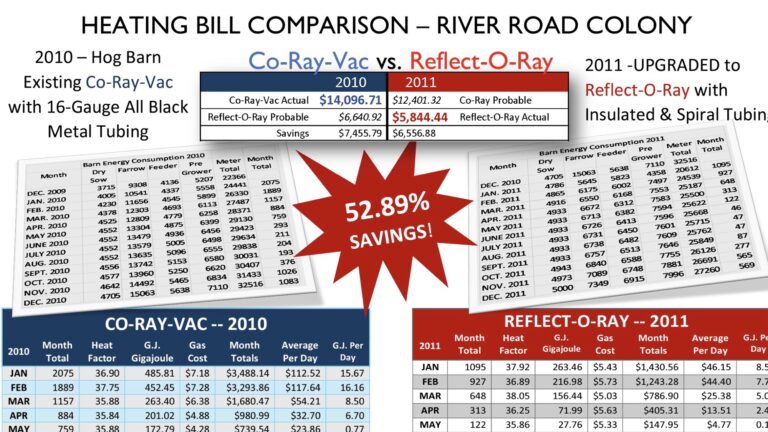
Explore how River Road Colony reduced heating costs by 52.89% by switching from Co-Ray-Vac to Reflect-O-Ray, enhancing energy efficiency and sustainability...

Infrared Radiant Tube Heating 101: Fundamentals and System Components

Learn how infrared radiant tube heating systems provide efficient heating for large spaces by directly warming objects and surfaces. Understand key components and their benefits...

Radiant Revolution: Game Changing 22-Gauge Aluminized Steel Spiral Tubing

In the crowded landscape of radiant tube-heating solutions, one system stands as the undisputed leader, cutting through the competition with unparalleled efficiency and innovation. Combustion Research...

Poultry

Reflect-O-Ray: Everything Heating

Understanding Air-First vs Surface-First Heating Air temperature isn’t barn temperature. A barn is floors, walls, cages, and the ceiling. When all of those sit close in temperature, the room stays dry...

THE SCIENCE OF INFRARED HEATING IN POULTRY BARNS

Why Heating Mass — Not Just Air — Changes Everything A deep scientific overview of radiant physics, mass activation, and the engineering principles behind next-generation low-intensity infrared...

Let the Sunshine In

Precision, Low-Intensity Infrared Radiant Heating for Poultry Growth & Health For generations, poultry producers have struggled with the same challenges: keeping chicks warm, maintaining a stable...

Unprecedented results at Sandhills Colony Broiler Facility: The Reflect-O-Ray® Difference

Explore the success story of Sandhills Colony, where Reflect-O-Ray® transforms the poultry game with its even heat distribution, user-friendly versatility, and efficiency. Discover the unique...

The Crucial Role of Dry Floors in Poultry Facilities

Maintaining dry floors in poultry facilities is not a housekeeping detail. It is a core biological and environmental requirement that directly affects bird health, airflow quality, pathogen control...

In Sync with Nature: Reflect-O-Ray® and the Harmonious Blend in Poultry Care

In the world of poultry care, where health and production reign supreme, Reflect-O-Ray’s® infrared radiant tube heating system takes the spotlight. Let’s dive into how this proven...

Ventilation in Poultry Facilities

Conventional heating methods, such as hot water or unit heaters, often present challenges in maintaining proper ventilation during colder months. The inherent warmth and heat distribution of...

Poultry Perfection: 7 Reasons Why Reflect-O-Ray Radiant Heating Takes the Lead

Harnessing the Power of Infrared Radiant Tube Heating for Poultry Facilities In the dynamic world of poultry farming, maximizing production efficiency and ensuring the well-being of your flock are...

Livestock & Swine

How River Road Colony Cut Costs and Boosted Efficiency with Reflect-O-Ray

Explore how River Road Colony reduced heating costs by 52.89% by switching from Co-Ray-Vac to Reflect-O-Ray, enhancing energy efficiency and sustainability...

Farrowing Success: Plainview’s Experience with Faroex

At Plainview Colony, where meticulous care for pigs is a way of life, Pete Hofer has seen firsthand the transformative impact of Faroex slats in their farrowing rooms. In a candid interview with Glenn...

Enhancing Profitability and Pig Health in Hog Barns with Reflect-O-Ray® Infrared Heating

Discover how Reflect-O-Ray® tube infrared heating transforms hog facilities, enhancing efficiency and profitability. Learn how this innovative technology accelerates days to market, reduces feed...

Bring the Sun into Your Barn: Harnessing the Power of Infrared

The magic of infrared radiant heating unfolds through the principle of molecular resonance. As objects, including your cherished animals, absorb mid-infrared influence, their molecules respond with a...

Optimizing Piglet Health and Growth with Infrared Radiant Tube Heating

When piglets are weaned from their mother hog, weaner piglets face a completely new environment. They’ve had the comfort of a heat lamp or electric pad to shield them from chilling factors. The...