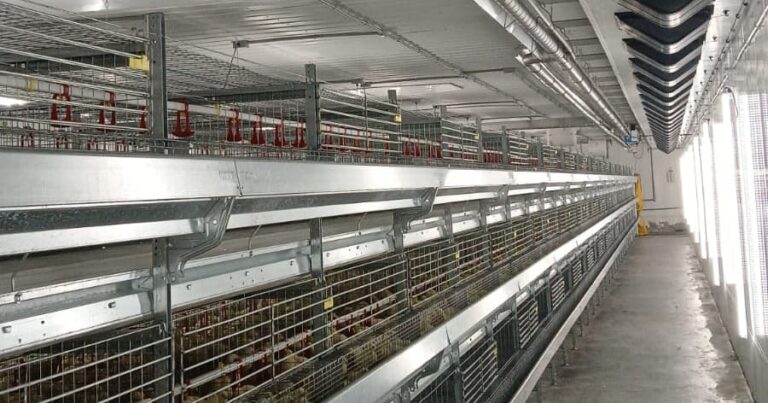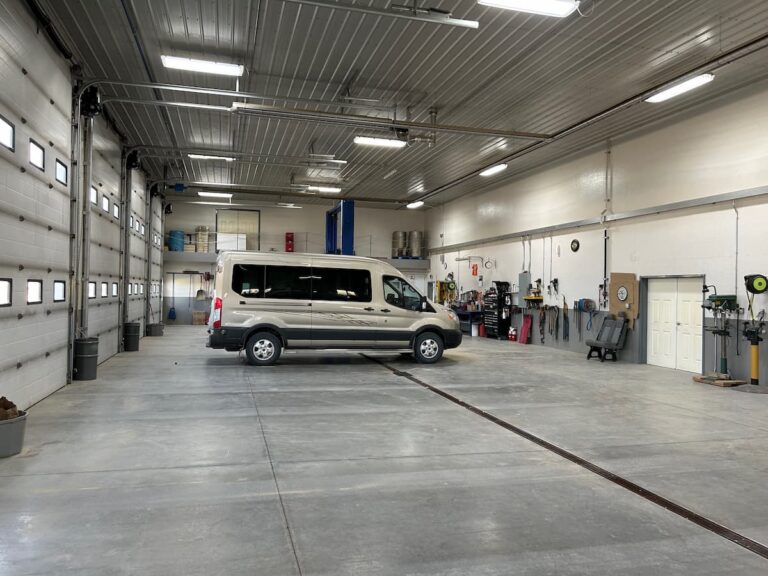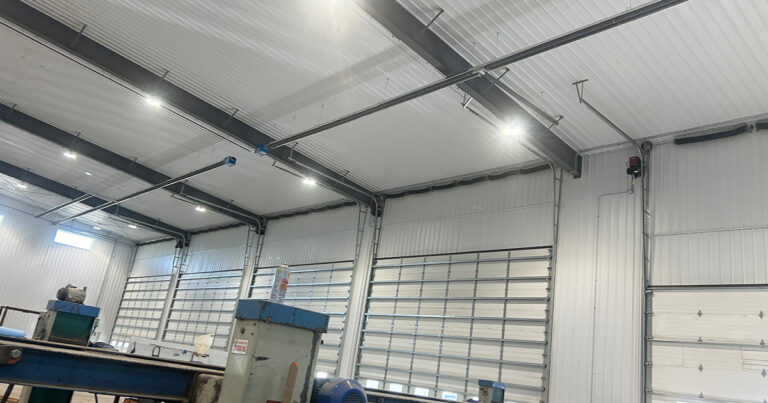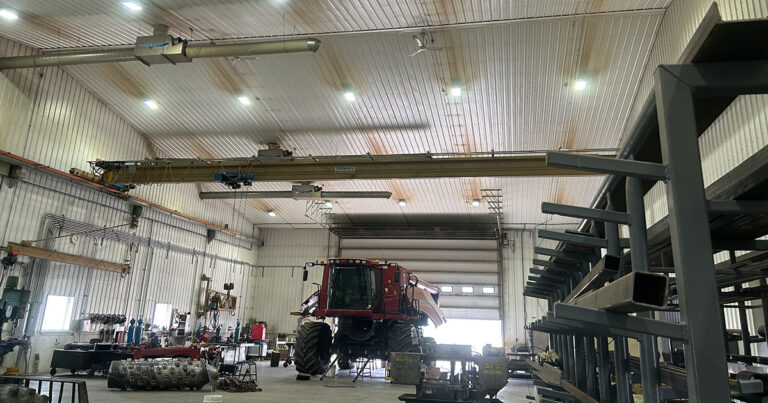
Maintaining dry floors in poultry facilities is not a housekeeping detail. It is a core biological and environmental requirement that directly affects bird health, airflow quality, pathogen control, and long-term production outcomes.
Most moisture problems in poultry barns are not caused by water on the floor. They are caused by uneven surface temperatures, especially during cold-weather operation.
When walls, floors, and structural surfaces remain cold while warm air circulates above them, condensation becomes inevitable. Once moisture forms on surfaces, it migrates into litter, dust, and organic material, creating ideal conditions for bacterial and fungal growth.
This is where heating physics matters.
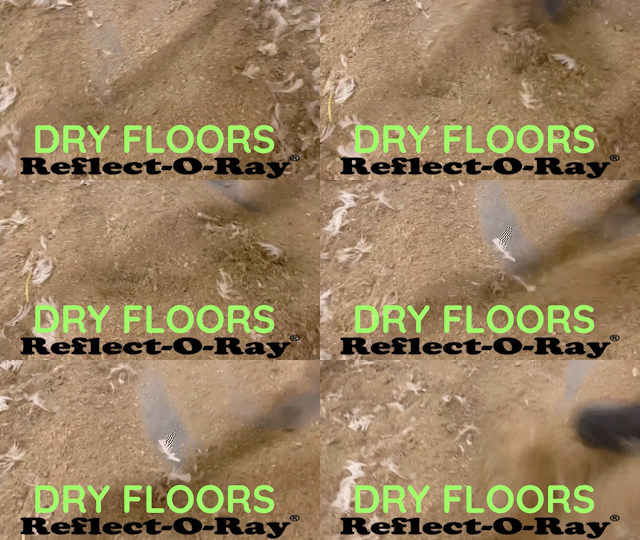
1. Dry Floors and Foot Health in Poultry
Wet or damp litter creates direct mechanical and biological stress on birds’ feet. Conditions such as bumblefoot are not random. They are environmentally driven injuries promoted by:
- moisture-softened skin
- contaminated organic material
- prolonged exposure to damp walking surfaces
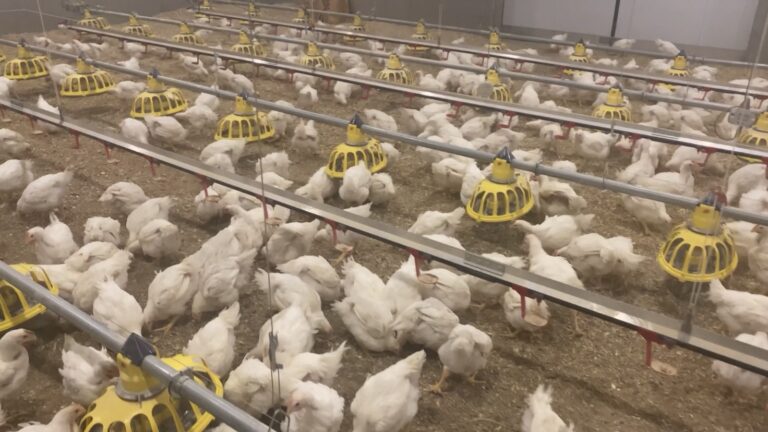
When floors remain dry and consistently warm, birds maintain stronger skin integrity, lower infection rates, and better mobility throughout the flock.
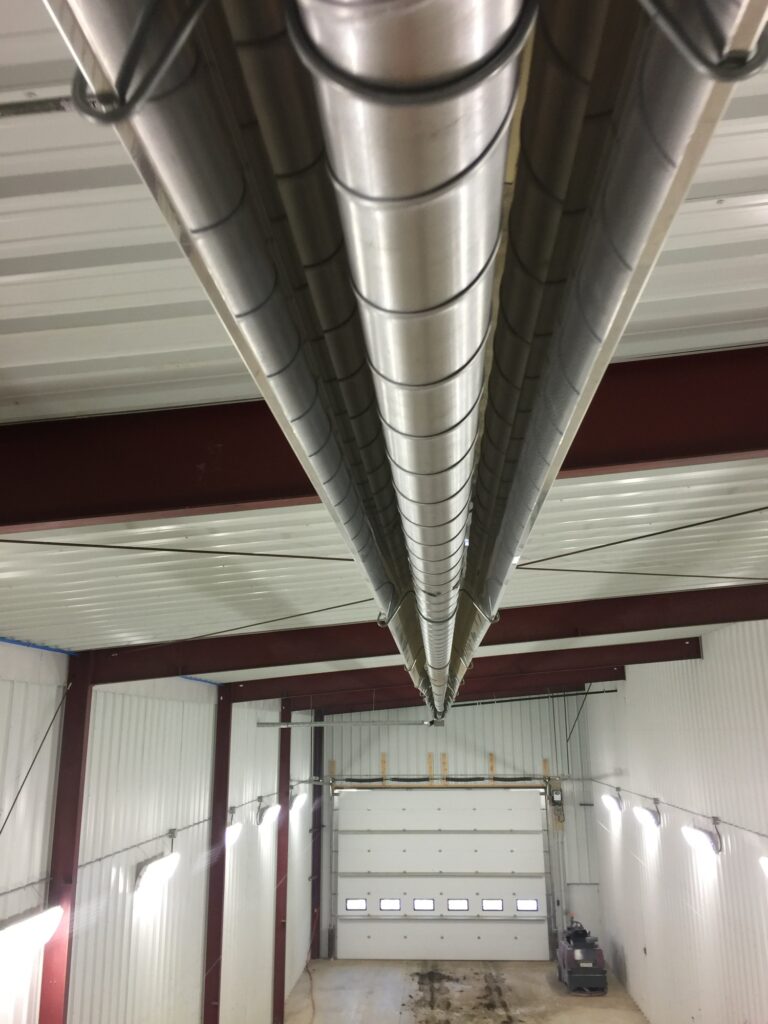
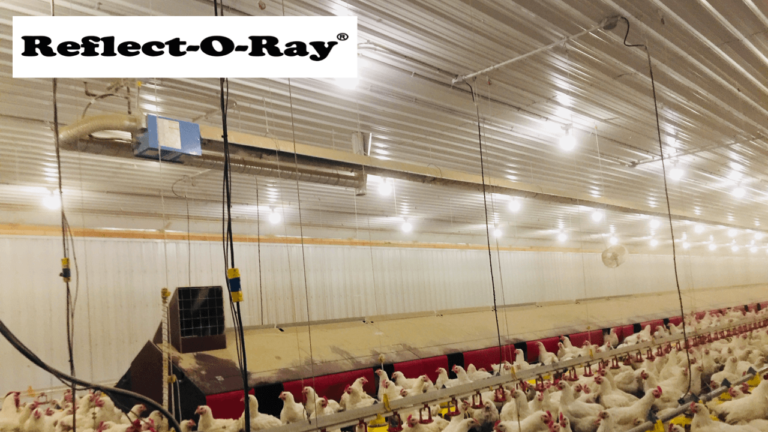
Reflect-O-Ray’s radiant heating works at the surface level. Instead of warming air first and hoping heat settles downward, it directly warms floors, walls, and structural mass, preventing the cooling conditions that allow moisture to appear.
2. Hygiene Is a Temperature-Controlled Process
Clean environments do not come from scrubbing harder. They come from removing the conditions where contamination thrives.
Moisture is the primary carrier of:
- bacteria
- mold
- ammonia release
- airborne pathogen movement
Conventional hot water and unit heater systems often create temperature gradients: warm air at ceiling height, cold surfaces at floor level. That imbalance causes persistent condensation along walls and in low-lying areas.
Radiant heating eliminates this gradient by bringing all major envelope surfaces into temperature equilibrium, drying the space passively and continuously. When surfaces stay warm, moisture simply has nowhere to form.
3. Poultry Comfort Depends on Surface Conditions, Not Air Temperature
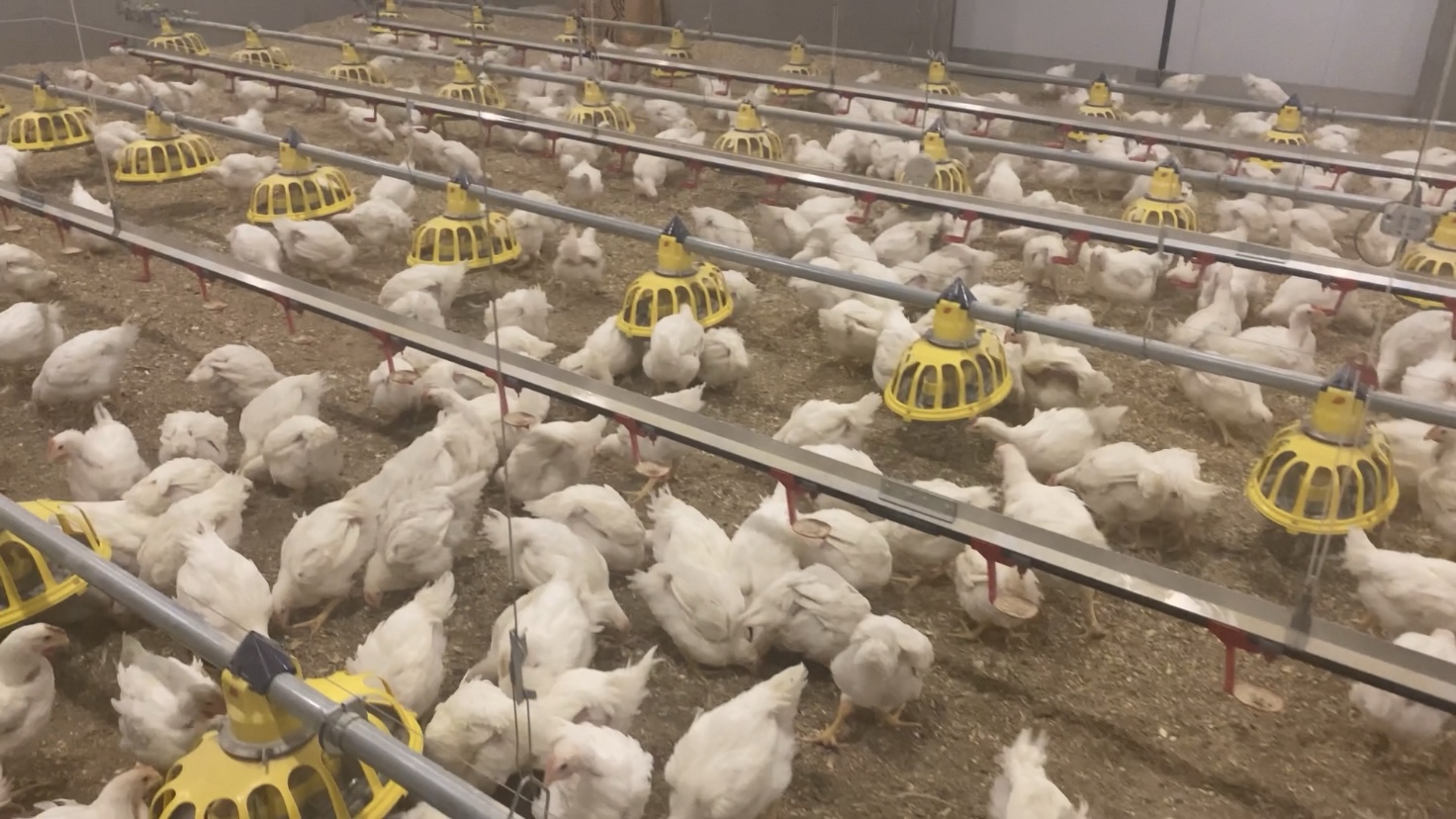
Birds live at floor level. Their thermal comfort is determined primarily by:
- surface temperature
- contact conditions
- evaporation rate at litter level
Cold surfaces pull warmth from the birds through conduction even when air feels warm overhead. This is one of the most common causes of hidden stress inside conventionally heated barns.
Consistent radiant surface warmth removes this extraction effect, stabilizing comfort without requiring excessive air temperature increases.
Dry floors aren’t just cleaner. They are biologically calmer.
4. Odor Control Is a Moisture-Control Problem
Odor production is driven by microbial activity. Microbes require moisture.
When floors remain dry:
- ammonia formation drops
- waste decomposition stabilizes
- airflow remains cleaner
- respiratory stress decreases
Radiant systems like Reflect-O-Ray allow continuous ventilation even in cold months because surface temperatures remain stable. Fresh air can move through the barn without collapsing floor temperature or creating condensation.
This combination of stable surfaces plus active ventilation is what prevents odor buildup at the source instead of masking it after the fact.
5. Dry Floors Form a Natural Disease Barrier
Pathogens do not thrive on dry, warm surfaces. They thrive in cool, damp, organic environments.
By eliminating persistent surface moisture, radiant heating removes the incubation layer where most disease vectors multiply. Dry floors slow transmission rates naturally, reducing the biological load inside the building before intervention is needed.
This is not chemical control. It is environmental prevention.
6. Why Reflect-O-Ray Outperforms Conventional Heating
Hot water slabs and forced-air heaters both rely primarily on air temperature control. They do not directly regulate wall, door, and surface temperatures with sufficient speed or uniformity.
Reflect-O-Ray operates differently:
- It warms the entire structural envelope
- It activates floors, walls, and equipment
- It removes the cold-surface moisture trigger at the root
- It stabilizes the building, not just the air inside it
This is why radiant heating consistently delivers dry floor performance where convection systems struggle.

7. Supporting Natural Bird Behavior
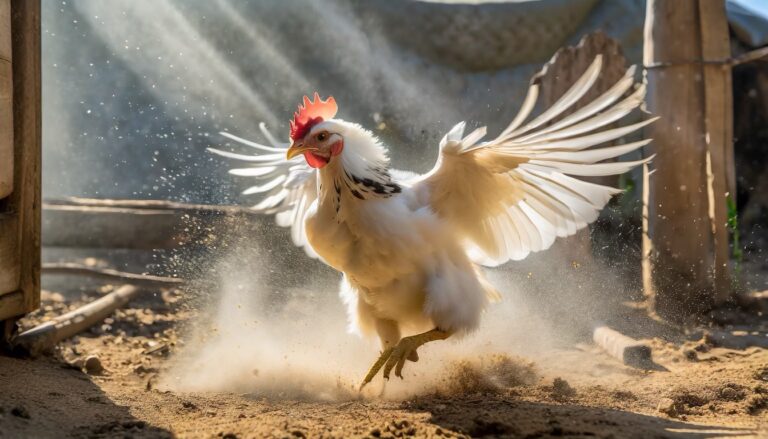
Dry floors also restore natural behaviors such as dust bathing, which is essential for feather health, stress regulation, parasite control, and general flock vitality.
When floors remain dry by design, birds function the way they are biologically intended to.
Conclusion
Dry floors are not a comfort feature. They are a health system.
By stabilizing surface temperatures and eliminating condensation at the structural level, Reflect-O-Ray creates an environment where pathogen pressure drops, litter stays dry, odor formation declines, foot health improves, bird stress decreases, and production stability rises.
This is not about warming air. It is about stabilizing the physical environment birds actually live in.
And that is where dry floors — and healthy flocks — begin.