
Viking Colony Barn 1: October Field Notes
Viking Colony's Barn 1 reached week 5 at 2.5% cumulative mortality, with weekly losses falling from 13 to 2 and a 3 ppm ammonia reading.
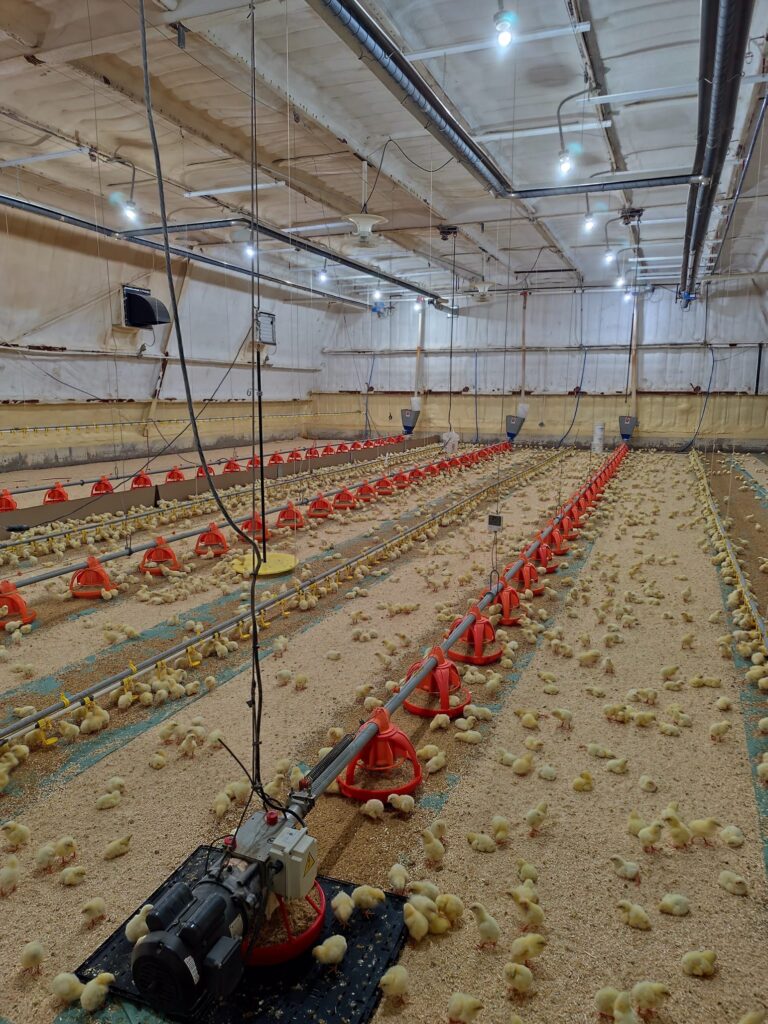
Viking Colony Barn 1: October Field Notes
Viking Colony’s Barn 1 reached week 5 of its October flock at 2.5% cumulative mortality, culls included. Weekly losses fell from 13 birds in week 2 to 2 in week 5. An ammonia spot reading on October 22 came in at 3 ppm, well under the 10 ppm Canadian guidance. And in early November, Viking adjusted its feed program because the birds were growing faster than expected.
Viking Colony runs seven barns near Viking, Alberta. When their old hot-water heating started failing, they switched all seven to Reflect-O-Ray instead of trialing just one. This is what Barn 1 recorded in October.
Five weeks in.
Weekly bird losses
Recorded deaths and culls, Barn 1
Week 1 isn’t shown because it spans two pages of the barn calendar.
Of the weeks shown, losses were highest in week 2 and dropped every week after that. By week 5, the barn was down to two birds.
3 ppm of ammonia.
Ammonia comes off the litter, and it climbs when the litter gets wet. Canada’s poultry Code of Practice recommends keeping ammonia from going above 10 ppm, and requires action if it reaches the 20 to 25 ppm range.
Barn 1’s spot reading on October 22 was 3 ppm.
Stepping down as the birds grew.
Barn temperatures came down from 32–33°C in early October to 25–26°C by the end of the month as the birds grew.
Growing faster than expected.
On November 7, Josh at Viking let us know the colony had adjusted its feed program because the birds grew faster than expected. They’re now using less feed.
You can see more of Viking’s barns, including video, on the Viking Colony install page, and the full story of their switch on our poultry page.
Written down by the colony.
Viking has offered to talk with producers who are thinking about replacing a heating system or building a new barn. Contact us and we’ll connect you.
Figures are from Viking Colony’s handwritten Barn 1 calendar for October 2026 and describe one flock in one barn. Results depend on the barn, the birds and how the flock is managed. Ammonia guidance: National Farm Animal Care Council, Code of Practice for the Care and Handling of Hatching Eggs, Breeders, Chickens and Turkeys, section 3.3.1.
Related articles from the same lane.
Why Most Radiant Heat Doesn’t Work
The pattern most producers actually saw — and why no amount of tuning was ever going to fix it.
Read article
What Your Chicks Know That Your Thermostat Doesn’t
Bird behavior is the most honest temperature sensor in your barn. When the chicks crowd the corners, they're not telling you the corners are...
Read articleHow Heat Actually Moves
A plain-talk explainer. Same fuel. Same energy. Two completely different barns. The difference isn't in the equipment specs — it's in the physics of...
Read article