
Your shop is colder
than your thermostat reads.
The thermostat says it’s warm. The metal door is at 42°F. Moisture is forming on every surface, and you can’t see it happening. One measurement tells the whole story.
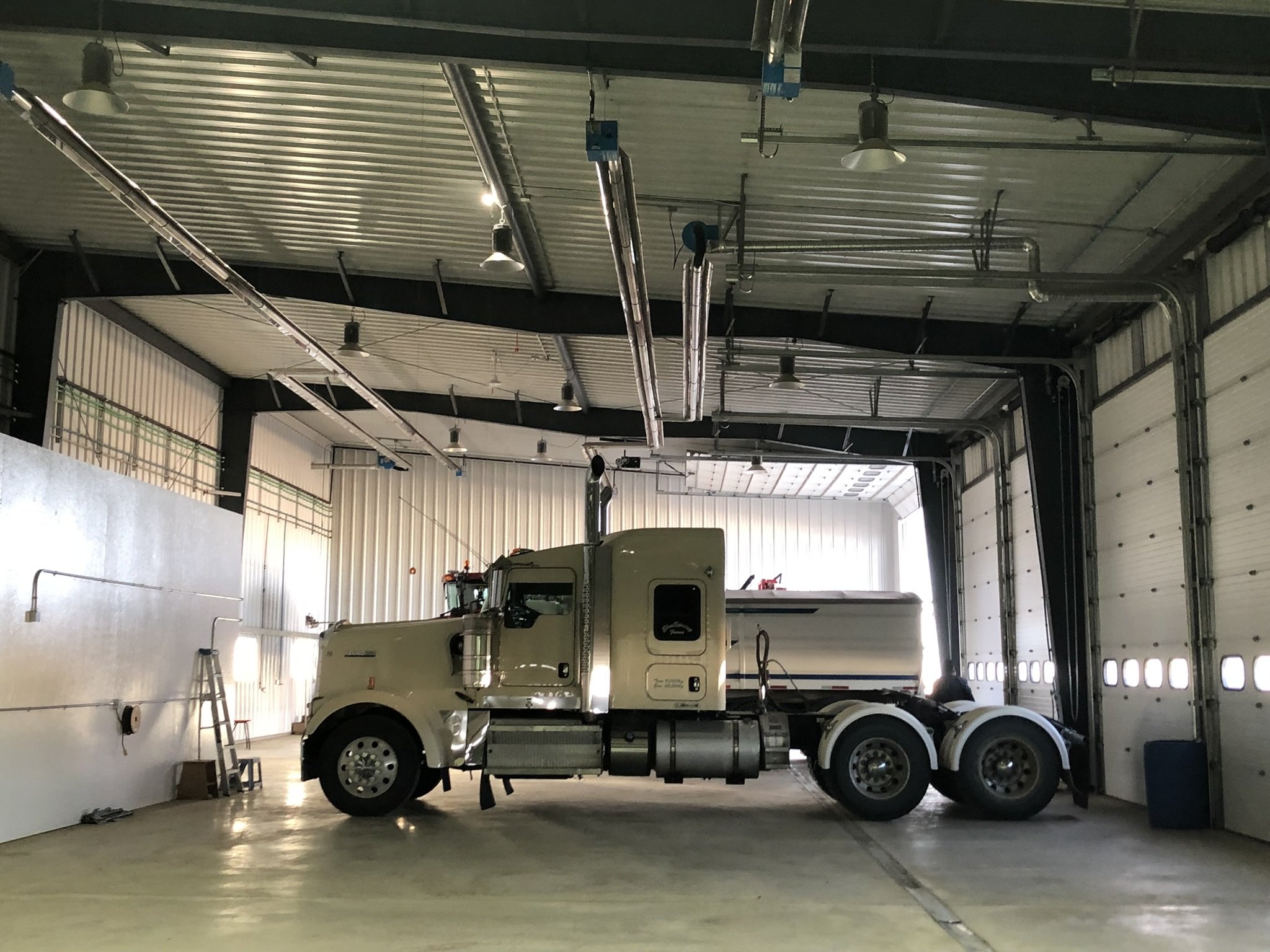
The symptoms of a shop
that isn’t really warm.
Freeze-ups
Pipes and lines in the shop walls freeze overnight even though the thermostat held temperature all night. Cold walls hold moisture that freezes when the system cycles.
Condensation & Rust
Rust on the door hinges. Staining along the bottom of the overhead door. Wet ceiling in the morning. Not a moisture problem — a surface temperature problem.
Cold Vehicles & Equipment
Trucks and machinery that sit overnight are cold to the touch even though the shop “was heated.” Working on cold metal in a “warm” shop. Long startups every morning.
High Fuel Bills
The system runs long cycles because it’s fighting cold mass all day. Every door opening dumps the warm air column and the system starts over.
Wet Bays That Won’t Dry
Wash bays stay wet for hours — or days — because the surrounding surfaces are cold and moisture has nowhere to evaporate to.
Uncomfortable Workers
Staff add layers even though the thermostat reads 68°F. Cold radiant surfaces surrounding them pull heat from their bodies faster than warm air can replace it.
All of these are symptoms of the same root cause: the heating system is warming air, not the building. The thermostat is satisfied. The building is not.
Two shops. One January night.
One measurement explains everything.
These surface temperatures were recorded in January 2017 at two real working shops in Western Canada. Same outside temperature. Both thermostats satisfied at the same air setpoint.
The thermostat in both shops was satisfied.
Surface temperature is what the building actually is. Air temperature is what the thermostat reads. In a large shop, these are two different numbers — and only one of them tells the truth about condensation, freeze-ups, and comfort.
Overhead radiant warms
what convection can’t reach.
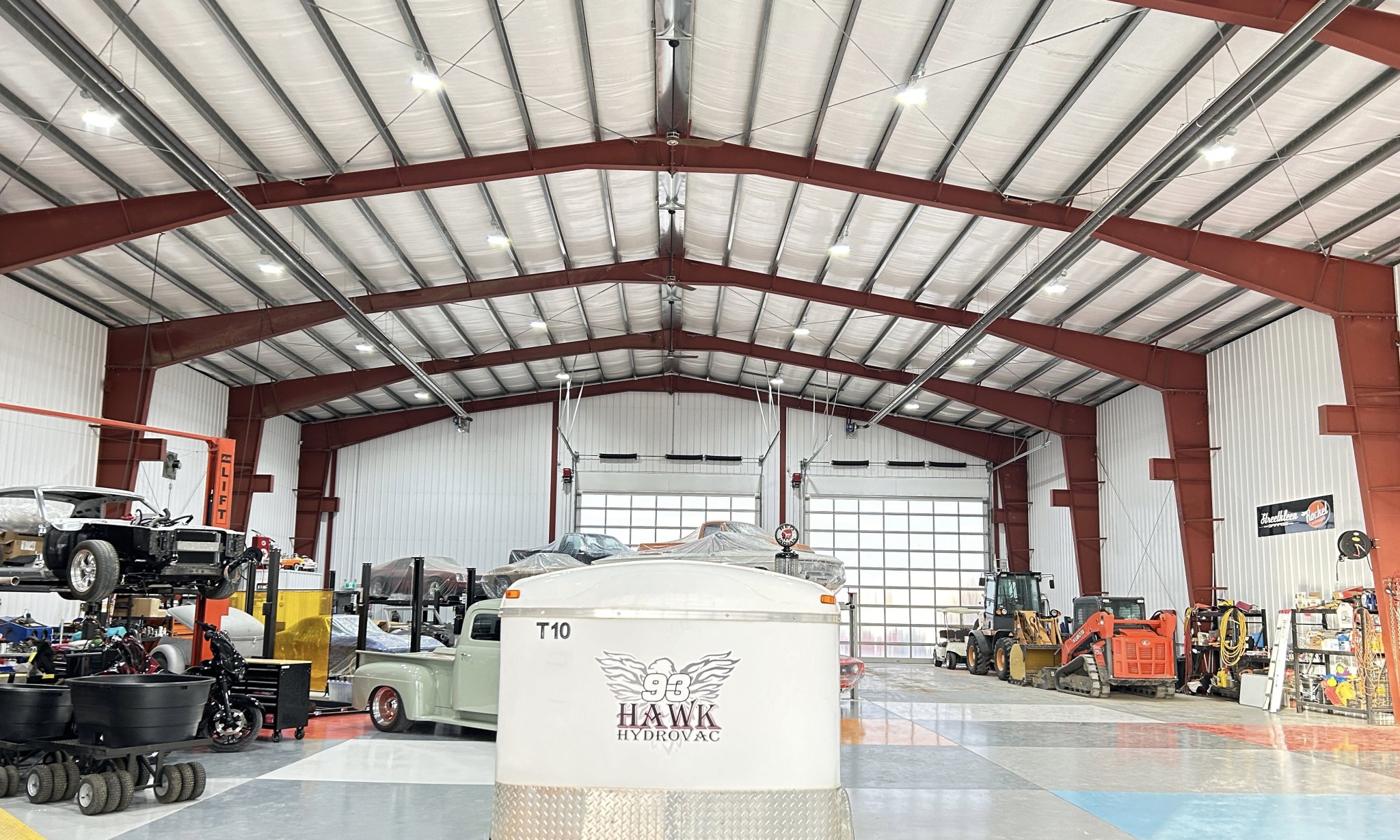
Reflect-O-Ray delivers infrared energy directly to surfaces — walls, doors, equipment, concrete, steel. Those surfaces absorb it, warm up, and re-radiate heat back into the space. Every surface in the building becomes part of the heating system.
When all surfaces are within a few degrees of each other, there is no dew point differential. Condensation stops. Freeze-ups stop. Equipment is warm when you start it. The building recovers from an open door in minutes, not hours.
Built for the building,
not the other way around.
Shop ceiling heights, bay configurations, and use cases vary widely. The system is sized and specified to your actual building.
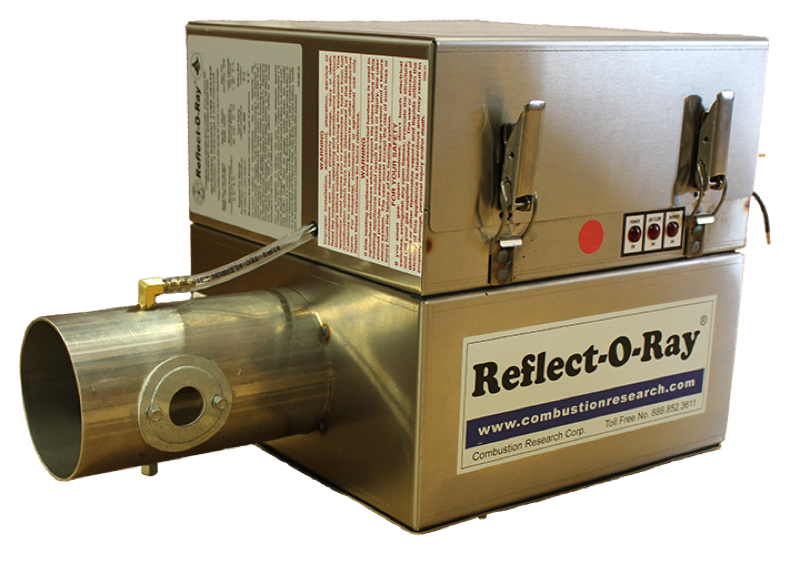
EDS 3.5
Lower ceiling shops, precision tradespaces, and areas where temperature control needs to be tight. Oil-fired option available for off-grid locations.
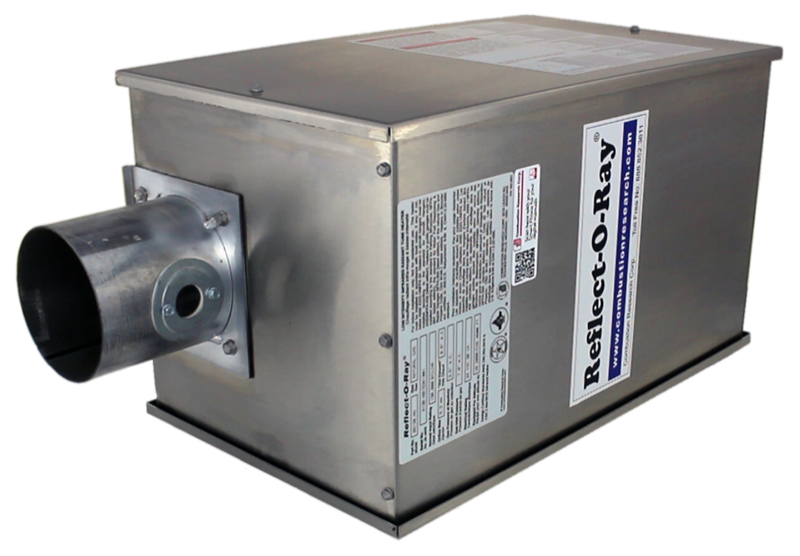
EDS 4.0 MOST COMMON
The workhorse for most shops, vehicle facilities, warehouses, and agricultural buildings. Delivers the reach and balanced output that large open volumes need. Stainless available for corrosive environments.
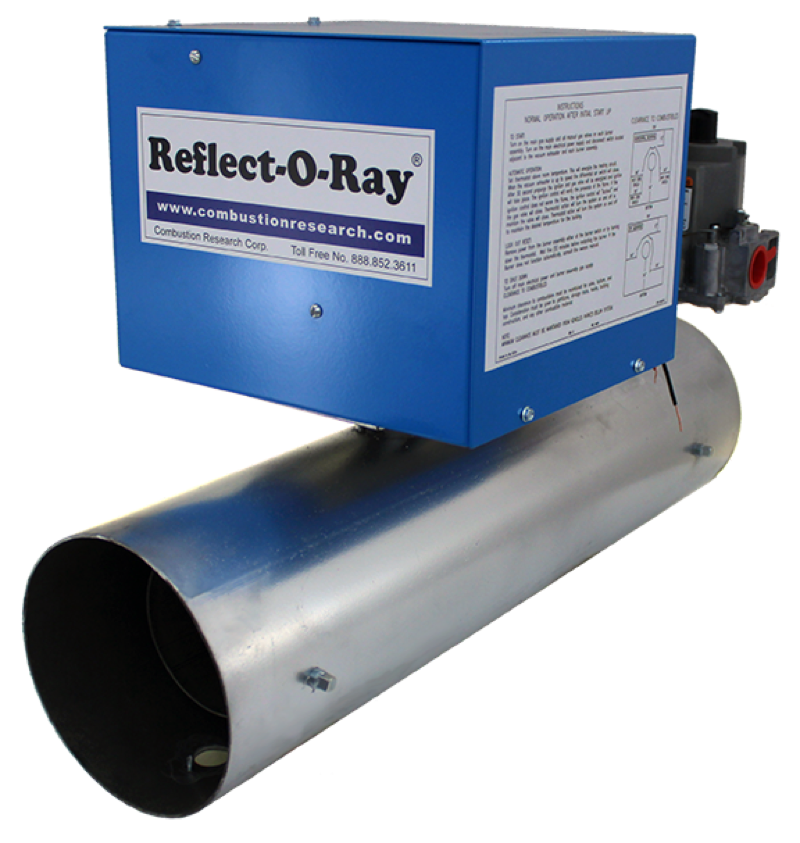
EDS 6.0
High-bay facilities, large industrial spaces, and hangars where ceiling height demands extended radiant travel before exhaust. When the building is big, the system needs to match it.
The physics, in full.
The Hidden Temperature in Your Shop
Real surface measurements from two Western Canadian shops at −35°C. Same day. Same weather. Very different buildings.
Underfloor Heating: The Uncomfortable Truth
Why heated floors that work in a bathroom fail in a shop — and what happens when you follow the physics all the way out.
The system behind these results
Reflect-O-Ray Vacuum-Vented Infrared Radiant Heating →
How it works, the three system sizes (3.5″ / 4″ / 6″), and where each fits.